20 AUGUST 2026
Grosvenor Farms breaks ground on renewable energy scheme
- Construction underway on anaerobic digester and integrated biogas upgrading facility
- New initiative to produce National Grid-ready biomethane from recycled agricultural waste, supplying enough renewable gas to heat around 6,000 homes a year
- It is estimated the scheme will avoid around 8,500 tonnes of CO₂ equivalent emissions annually

Award-winning Grosvenor Farms in Cheshire – one of the UK’s leading dairy and arable farms – has broken ground on a new initiative to produce National Grid-ready biomethane from recycled agricultural waste, supplying enough renewable gas to heat around 6,000 homes a year and strengthening the UK’s energy resilience.
As part of its wider circular and regenerative farming approach and building on a track record of innovation and one of the lowest carbon footprints in UK milk production, the project – on land at Grosvenor’s Eaton Estate, Cheshire – involves investment in an anaerobic digester and integrated biogas upgrading facility.
Anaerobic digesters use microorganisms to break down agricultural waste, producing biogas and digestate – a high-quality organic fertiliser that also enhances soil health. The biogas is upgraded to make biomethane, which is injected into the National Grid, and the fertiliser is used on the farm, reducing reliance on resource‑intensive inorganic fertilisers.
It is estimated the scheme will produce in excess of 72 GWh of biomethane per year from up to 170,000 tonnes of manure, avoiding around 8,500 tonnes of CO₂ equivalent emissions annually.
Grosvenor Farms’ location provides a unique opportunity to safely connect to the national high-pressure gas network, which runs adjacent to the facility, through underground pipes. Biomethane will be sent directly into the National Transmission System, which acts like a motorway for gas, moving it quickly and efficiently across the country.
In addition to enabling the production of renewable energy, anaerobic digestion improves air quality by capturing pollutants such as ammonia.
CO₂ created during the biogas upgrading will be captured and liquefied for reuse in industry as Bio CO₂.
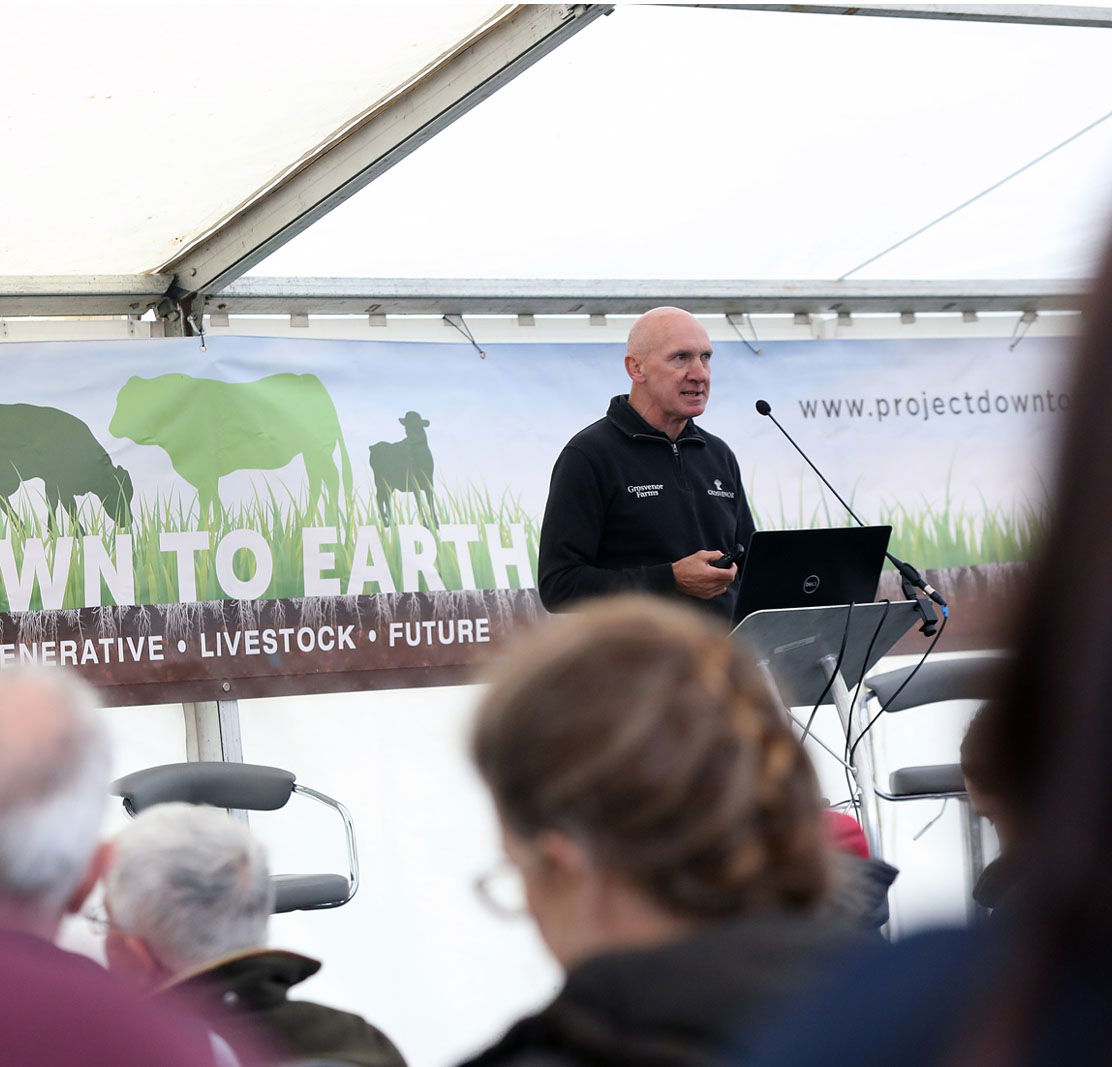
Mark Roach, Managing Director, Grosvenor Farms, said:
This is a hugely significant investment into the future of farming at Grosvenor, strengthening our commitment to operating in both a commercially sustainable and environmentally responsible way.
We believe the facility will result in an estimated 8,500 tonnes of CO2 equivalent avoided a year - equal to taking 1,800 cars off the road - while generating enough biomethane, a renewable energy, to heat 6,000 homes annually, contributing to the UK’s resources via the national grid.
As well as supporting employment during its construction, there will be four new long-term roles created, contributing to the local rural economy.
The plant has the potential to fuel Grosvenor Farm’s vehicles on its own biomethane, in due course.
Specialist Netherlands’ firm HoSt Bioenergy Systems, a global leader in renewable energy, has been commissioned to build the facility.
It is being constructed at Grosvenor Farms, providing convenient access to infrastructure while minimising the impact on the landscape, nearby roads and the environment.
Sjaak Klein Gunnewiek – Head of Sales at HoSt Bioenergy Systems said: “The collaboration between Grosvenor Farms and HoSt Bioenergy Systems on the realisation of an anaerobic digestion facility is a powerful example of how agriculture and technology come together to accelerate the energy transition. Together, we are reducing the nation’s carbon footprint and actively contributing to more resilient systems and sustainable farming practices in the UK. Partnerships like this are essential to reach our shared climate ambitions.”
Paul Mannion
Public Relations and Communications Manager
+44 (0)1244 684400
paul.mannion@grosvenor.com